for a Transforming World.
Build next-generation workforce systems where humans and AI agents work as a unified workforce.
Changing the Way We Think About Workforce Systems
WFM Labs is a workforce intelligence community building the next-generation approach to how work gets planned, staffed, and executed. We incorporate tools like automation, simulation, and workforce intelligence to deliver superior results — for employees, customers, and shareholders.
Our community examines workforce systems in a new light: where employees are prioritized first, where variance becomes fuel rather than the enemy, and where the entire discipline evolves to meet the demands of a workforce that is no longer entirely human.
Five Levels of Workforce Intelligence
A practical framework for understanding where your organization stands today and what it takes to advance. Tap any level to explore.
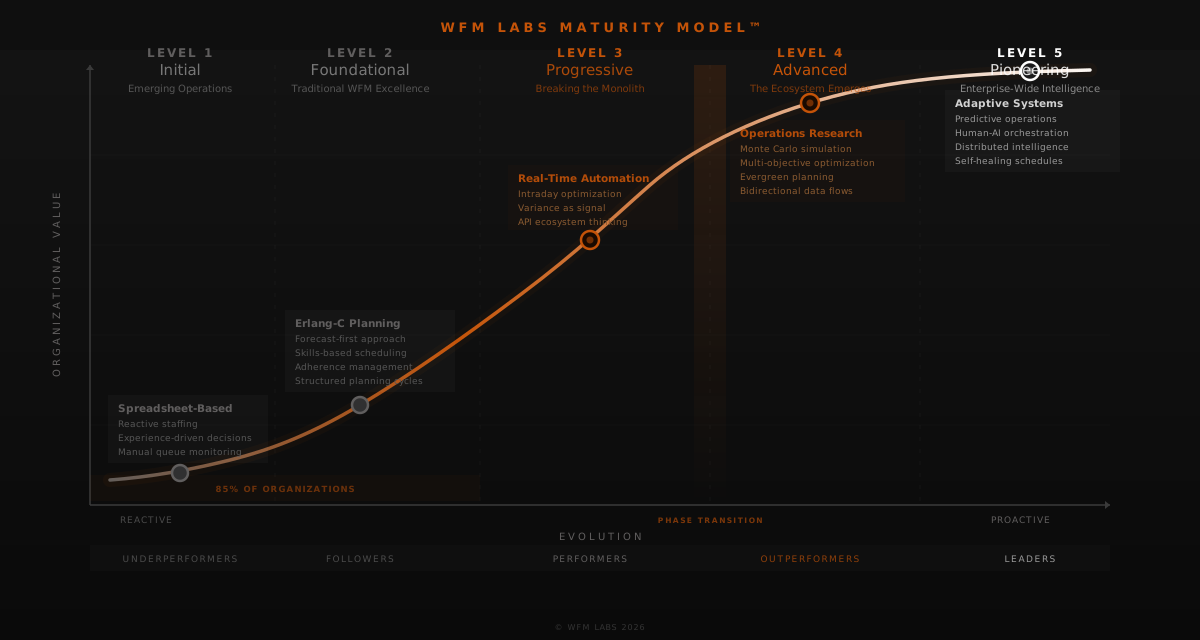
The starting point for organizations lacking formal workforce management practices. Supervisors monitor queues personally, staffing adapts reactively, and decisions are based on experience and intuition.
- Direct leadership — supervisors monitor queues personally
- Flexible staffing adapts reactively to changing conditions
- Spreadsheet-based tracking without optimization
- Experience-based decision-making (intuition over data)
- All-hands collaborative culture
- No formal forecasting methodology
- Scheduling based on availability and preference
- Shrinkage not formally tracked
- Service levels measured reactively if at all
- Tribal knowledge drives staffing decisions
- Agility without bureaucratic constraints
- Deep customer intimacy — leaders know every client
- Strong team unity and shared purpose
- Immediate issue surfacing (nothing gets buried)
- Creative, entrepreneurial problem-solving
- Customer-first mindset carries forward at every level
- Operational awareness that data alone can't replicate
- Team resilience built through shared challenges
- Problem-solving skills that scale with the right systems
- Volume increases beyond 50 workers (critical at 100+)
- Service inconsistency becomes visible to customers
- Manager burnout from constant firefighting
- Cost pressures from reactive staffing decisions
- Inability to plan beyond the current week
- Begin systematic data collection (volumes, handle times)
- Identify patterns in demand (day-of-week, time-of-day)
- Designate scheduling coordination roles
- Explore WFM software solutions
- Document processes that exist only in people's heads
Traditional workforce management mastery through professional processes, dedicated teams, and comprehensive platforms. This is where most organizations achieve real value.
- Comprehensive WFM platforms (forecasting, scheduling, adherence)
- Structured planning cycles — weekly, monthly, annual
- Skills-based scheduling across channels
- Adherence management with real-time monitoring
- Historical data analysis for trend identification
- Predictable, repeatable operations
- WFM recognized as a professional discipline with career paths
- Cost control through data-driven staffing
- Agent equity in scheduling via seniority systems
- Analytics-based decisions replacing gut feel
- Forecast-first: volume and handle-time accuracy drive everything
- Traditional shift bidding based on seniority
- Defined shrinkage planning (training, breaks, coaching)
- Performance dashboards and reporting
- Intraday manual adjustment when variance occurs
- Annual capacity plans set staffing targets
- Monthly re-forecasts adjust for trends
- Weekly schedule generation and optimization
- Daily intraday monitoring and manual rebalancing
- Seasonal adjustments drive hiring cycles
- Intraday volatility outpaces manual intervention
- Omnichannel complexity exceeds scheduling models
- Remote workforce needs flexibility platforms can't deliver
- Rising expectations for real-time responsiveness
- Seasonal planning creates annual Excel gymnastics
- Purpose-built automation alongside core WFM
- API-based ecosystem thinking over vendor lock-in
- Variance as signal rather than failure
- Continuous execution focus over periodic planning
- Recovery of invisible capacity (micro-gaps)
Traditional platforms alone cannot address real-time complexity. Purpose-built automation begins operating alongside core WFM, and ecosystem thinking replaces vendor lock-in.
- Continuous performance monitoring every few seconds
- Dynamic activity management — breaks, coaching shift automatically
- Intelligent overtime avoidance through predictive modeling
- Multi-skill optimization using real-time algorithms
- Automated variance response as deviations occur
- Forecasting becomes directional guide, not gospel
- Scheduling incorporates dynamic buffer time
- Shrinkage transforms from fixed to dynamic capacity
- Success metrics expand to include adaptability
- Contingency plans execute automatically
- WFM transitions from planning-focused to execution-focused
- Acceptance that forecasts will be wrong — adaptation matters more
- Building organizational trust in automation
- Data democratization across functions
- Variance accepted as normal operating condition
- API fluency — technical integration becomes a core skill
- Data democracy — information flows freely across teams
- Automation confidence — trust built through results
- Variance as normal — deviation is fuel, not failure
- Change management maturity for technology adoption
- Specialized automation platforms (best-of-breed solutions)
- API-based integration — bidirectional data flow
- Hybrid architecture separating planning from execution
- Breaking vendor lock-in with ecosystem thinking
- Cloud infrastructure for real-time processing
- Real-time data feeds from ACD/telephony systems
- Cloud infrastructure for scalable processing
- Integration standards (REST APIs, webhooks)
- Change management tools for adoption
- Monitoring and alerting for automation health
In a 1,000-worker operation, automation harvests 847 micro-gaps daily — 42 hours of recoverable capacity. Variance becomes fuel.
Specialized OR engines exchange bidirectional data with core WFM. Planning becomes evergreen. This requires a structural redesign — not incremental improvement.
“You cannot reach Level 4 by doing Level 3 better. The organizations that make the jump do so by redesigning their workforce planning function around the blended workforce.”
- Ensemble prediction models selecting optimal performers per interval
- Monte Carlo simulation for probabilistic capacity planning
- Stochastic and distributionally robust optimization
- Risk-aware capacity buffers based on variance profiles
- Prescriptive analytics recommending specific actions
- Simultaneous optimization: cost, CX, EX, revenue
- Dynamic trade-off analysis across competing objectives
- Scenario modeling for what-if capacity decisions
- Channel optimization across voice, chat, digital
- Real-time rebalancing as conditions change
- Interval-level data sharing between all platforms
- Enriched prediction feedback loops
- Automated calibration — models self-correct
- Cross-platform intelligence synthesis
- Real-time data streams from live APIs
- Business metrics: subscriber counts, claims, product launches
- External factors: weather, economic indicators, events
- Marketing spend and promotion calendars
- Social sentiment and customer behavior signals
- Causal relationships between drivers and demand
- HR systems — skills, tenure, performance, certifications
- Financial systems — revenue per transaction, cost structures
- CRM — customer value, interaction history, preferences
- Quality management — scoring, coaching needs
- Multi-source truth with clear data ownership
- Routing decisions enriched with cost/value context
- Staffing plans aligned with financial targets
- Skills development driven by actual gaps, not guesses
- Foundation for role-based AI agents
- Flexible monetization: consumption, role, or value-based
- Continuous automatic plan updates replace annual cycles
- Self-maintaining models that calibrate in real-time
- Automated scenario planning for multiple futures
- Elimination of Excel gymnastics
- Plans always current — no stale forecasts
- WFM leaders spend time on strategy, not spreadsheets
- Hiring decisions informed by live demand signals
- Budget variance minimized through continuous adjustment
- Seasonal surprises eliminated by rolling forecasts
- Strategic time reallocation from admin to insight
Complete integration of WFM into enterprise decision-making. AI augments rather than replaces. Multi-objective optimization determines ideal routing for every interaction.
- AI tools join as they prove value — not forced adoption
- Humans remain core for high-value, complex, emotional contacts
- AI augments humans: real-time guidance, knowledge, admin automation
- Multi-objective routing per interaction type
- Role-based digital workers when ROI is proven
- System adapts to whatever mix emerges
- Predictive models for empathy, judgment, creativity needs
- Revenue impact analysis per interaction type
- Customer satisfaction modeling: human vs. automated
- Cost-benefit with full lifecycle value
- Continuous improvement loops refining the balance
- Customer journey intelligence — anticipation and preparation
- Behavioral pattern recognition by segment
- Self-healing schedules that automatically rebalance
- Intelligent routing — optimal path per interaction
- Real-time demand sensing from digital properties
- Automated compliance management
- Global talent pool access across geographies
- Dynamic routing matching needs with worldwide capabilities
- On-demand expert access for specialized interactions
- AI-assisted rapid skill development and training
- Performance tracking that values human connection
- Distributed truth — multiple authoritative systems, no single master
- Dynamic source mapping with clear definitions per data element
- Intelligent data orchestration across the enterprise
- Contribution without ownership — systems share freely
- Flexible monetization models (seat, role, consumption-based)
- Natural language queries for workforce analytics
- What-if scenario modeling in real-time
- Predictive models linking workforce to business outcomes
- Real-time dashboards for all stakeholders
- Automated recommendations with confidence levels
- Predicting customer needs vs. reacting to contacts
- Enhancing human capabilities vs. chasing trends
- Quantifying human value vs. guessing
- Optimizing holistically vs. in silos
- Preparing for multiple futures vs. betting on one
- Building on human solutions for work that matters most
- Leadership that values humans and technology equally
- Architecture respecting distributed systems
- Culture embracing enhancement over replacement
- Investment in both human and tech development
- Metrics beyond cost reduction
- Governance with shared ownership across functions
85% of organizations operate at Level 1 or 2. Understanding where you are determines what investments will actually move the needle.
The Intellectual Foundation for What Comes Next
The gap isn't technology. It's framework. Every organization deploying AI alongside humans faces the same structural questions. Here's how we answer them.
The world of work is transforming. Knowledge workers now work alongside AI agents that are not just tools but participants in the work itself. Agents that carry capacity, handle volume, produce outputs, and make decisions within defined boundaries.
Workforce intelligence — with its focus on supply and demand, capacity optimization, and the operational systems that connect them — is the natural intellectual foundation for navigating this transition.
“You cannot reach Level 4 by doing Level 3 better. The organizations that make the jump do so by redesigning their workforce planning function around the blended workforce.”
Not because one discipline should own it, but because the frameworks built under operational pressure are exactly what every function managing workers — human and AI — now needs.
When AI enters the workforce, work doesn't just get faster — it reorganizes. Every organization deploying AI alongside humans discovers the same pattern: work naturally separates into distinct modes that require fundamentally different management approaches.
Work that AI handles end-to-end. Elastic, scalable, and cost-efficient — but only for the right tasks. The risk is assuming containment equals savings.
Humans and AI working together — each amplifying the other. New roles emerge that didn't exist before, requiring new management frameworks and new ways of measuring productivity.
Complex, high-stakes, relationship-driven work that requires full human expertise. As AI absorbs routine work, what remains is harder, more consequential, and more valuable.
Traditional planning asks: "How many people do we need?" Value-based planning asks: "What combination of human and AI capability delivers the best outcomes across cost, quality, and experience simultaneously?"
- Multi-objective optimization replaces single-variable staffing
- Cost, customer experience, employee experience optimized together
- Revenue impact per interaction type drives routing
- Customer lifetime value factors into every decision
- Workforce mix decisions informed by real economics
- Frontier Airlines eliminated call support — stock collapsed from $13 to under $5
- Over-reliance on AI erodes relational value in human interactions
- Value is co-created through customer-provider interaction
- The cheapest option is rarely the most valuable
- Short-term cost cuts can destroy long-term shareholder value
40% AI containment does not equal 40% savings. Expect 20–25%. Four effects determine whether AI deployment actually saves money.
Remaining work is harder. Cycle times increase even as volume drops. The humans handling what AI can't do are working on harder problems.
Jevons Paradox. Total demand grows as service improves. Better AI means more people requesting things they wouldn't have bothered with before.
Hard work clusters. As easy interactions are absorbed by AI, what remains requires deeper expertise and longer cycle times.
Containment rates decay over 12 months. Without active lifecycle management, AI agents degrade — frozen in time while the business changes.
This isn't a future prediction. Organizations are already deploying AI agents that carry capacity, handle volume, and make decisions within boundaries. The question isn't whether this happens — it's whether you design for it deliberately or let it happen to you.
- AI agents require the same management attention as human workers
- Capacity planning must account for three distinct workforce pools
- The planning question shifts from headcount to capability mix
- Staffing models diverge: Erlang-C, cognitive load, cost-per-transaction
- Every function managing workers — human or AI — faces this
- Ecosystem architecture — not a single platform doing everything
- Value-based metrics — not just cost reduction targets
- Human investment — what remains is harder and more valuable
- Continuous adaptation — seasonal planning cycles can't keep up
- Framework before technology — tools without architecture fail
Adaptive: Building Workforce Systems for an Unpredictable Future
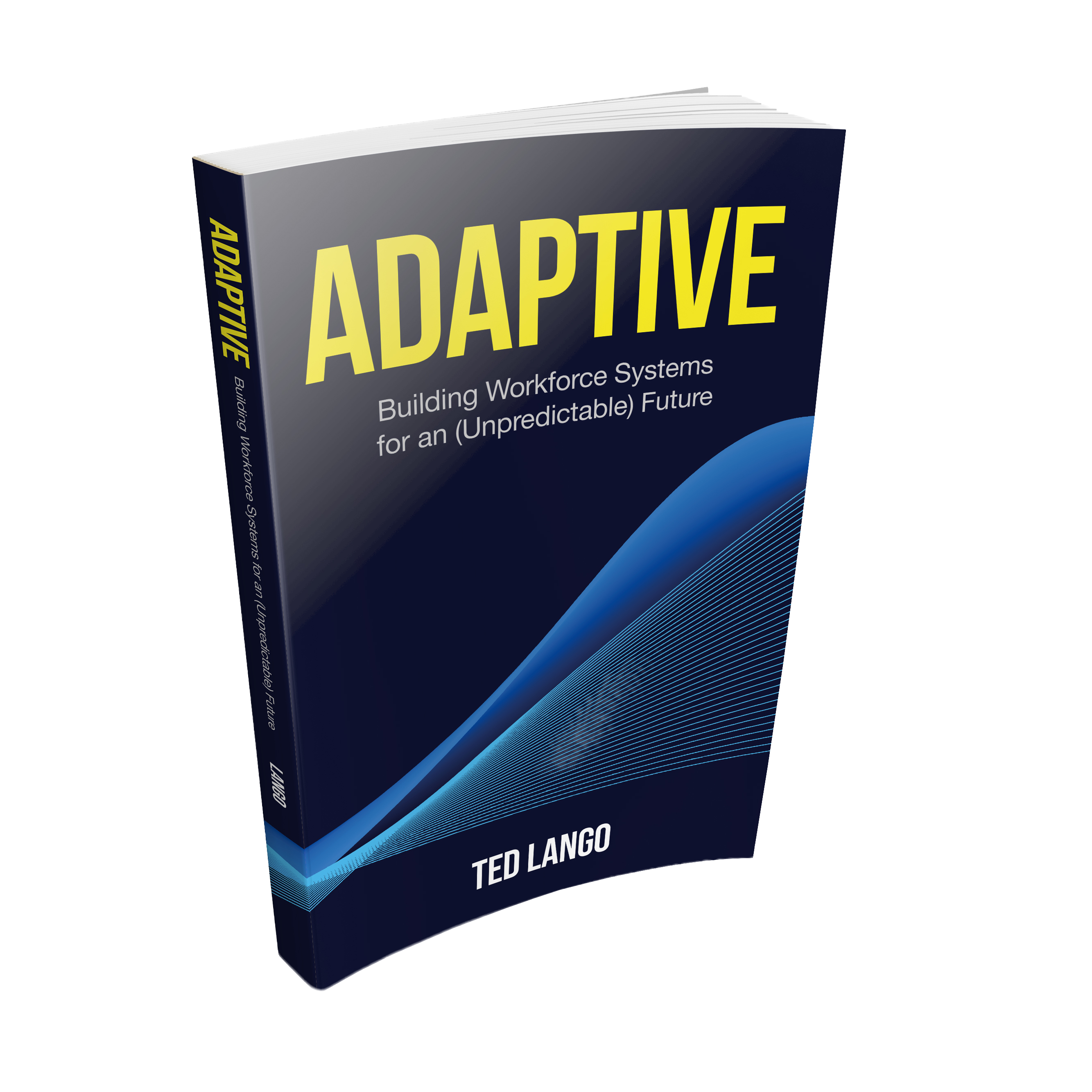
A practical model for moving from legacy operations to resilient, data-driven workforce systems built for a transforming world. Combines clear frameworks with actionable checklists.
By Ted Lango • Founder, WFM Labs
Built for Builders. By Builders.
WFM Labs is where workforce intelligence professionals build the next generation of frameworks, tools, and practices for a transforming world.
Join WFM Labs →