Microbreaks Lower Stress
Microbreaks have been found to be effective in lowering stress levels in various work settings, including call center jobs. Research has shown that high levels of job stress can negatively impact employee well-being and performance, making stress management strategies essential for contact center operations.
The Benefits of Movement-Based Microbreaks
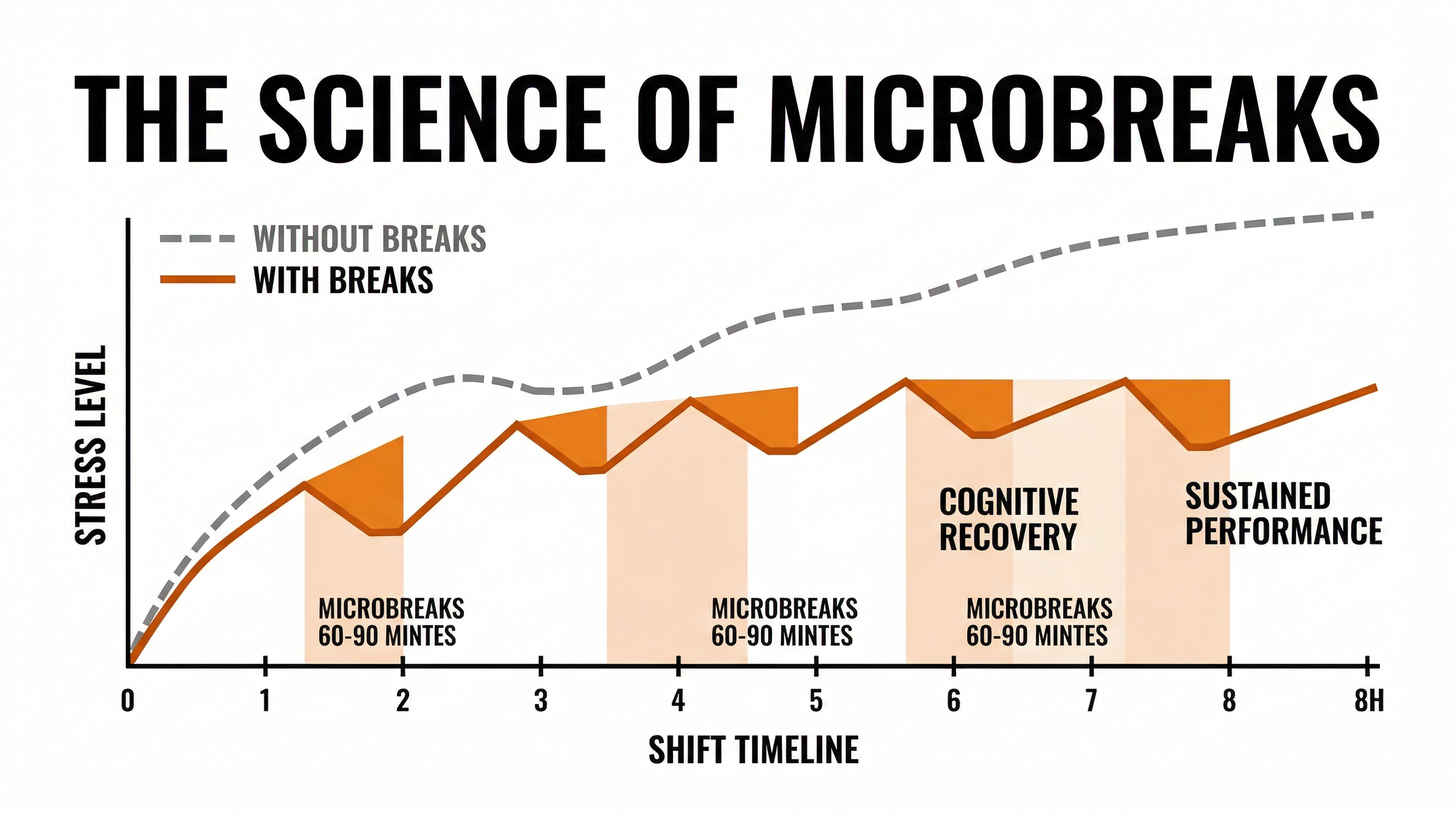
Movement-based microbreaks have been found to have positive effects on mood states, including reducing fatigue and increasing vigor (Mainsbridge et al., 2020). These breaks allow employees to physically and mentally recharge, leading to improved job satisfaction and performance (Ruyter et al., 2001).
In call center jobs, where employees are often required to sit for long periods and handle challenging customer interactions, microbreaks can provide much-needed relief and help prevent burnout (Rø et al., 2010). Additionally, microbreaks can help reduce the physical strain associated with prolonged sitting or standing, which is common in call center work (Meijsen & Knibbe, 2007). By incorporating short breaks into their work routine, call center employees can reduce the negative impact of job stress on their mental and physical well-being.
Implementing Microbreaks in Call Centers
Implementing microbreaks in call center jobs requires a supportive organizational culture that values employee well-being. Providing opportunities for movement and relaxation during work hours can help create a healthier work environment (Mainsbridge et al., 2020).
Training and development programs that focus on stress management and building resilience can also be beneficial (Iwu et al., 2021). Moreover, promoting autonomy and providing necessary job resources — such as knowledge management skills — can empower call center employees to better handle work-related challenges and improve job satisfaction (Iwu et al., 2021). By prioritizing the implementation of microbreaks and supporting employees’ mental health, call centers can create a more positive and productive work environment.
The WFM function plays a direct role in whether microbreaks are operationally possible. When occupancy targets are set at levels that leave no capacity for genuine recovery between contacts, microbreaks become scheduling artifacts rather than lived practice. The interval-level analysis required to build real recovery time into shift structures — without degrading service levels — is exactly the kind of precision planning that advanced WFM frameworks enable.
This connects to the broader argument in mental wellbeing and agent performance: interventions like microbreaks work in concert with other wellbeing supports. Mindfulness, emotional intelligence training, and structured recovery time reinforce each other. Organizations that implement one in isolation and ignore the others are getting partial benefit from a system that works best as a whole.
References
Iwu, C., Opute, A., Aliyu, O., Eresia-Eke, C., Musikavanhu, T., & Jaiyeola, A. (2021). A structural equation modelling evaluation of antecedents and interconnections of call centre agents’ intention to quit. Journal of Risk and Financial Management, 14(4), 179. Link
Mainsbridge, C., Cooley, D., Dawkins, S., Salas, K., Tong, J., Schmidt, M., … & Pedersen, S. (2020). Taking a stand for office-based workers’ mental health: the return of the microbreak. Frontiers in Public Health, 8. Link
Meijsen, P. and Knibbe, H. (2007). Prolonged standing in the or: a dutch research study. Aorn Journal, 86(3), 399-414. Link
Mosadeghrad, A., Ferlie, E., & Rosenberg, D. (2011). A study of relationship between job stress, quality of working life and turnover intention among hospital employees. Health Services Management Research, 24(4), 170-181. Link
PhD, R., Park, H., & PhD, R. (2017). Mental health status and its predictors among call center employees: a cross‐sectional study. Nursing and Health Sciences, 19(2), 228-236. Link
Ruyter, J., Wetzels, M., & Feinberg, R. (2001). Role stress in call centers: its effects on employee performance and satisfaction. Journal of Interactive Marketing, 15(2), 23-35. Link
Rø, K., Tyssen, R., Hoffart, A., Sexton, H., Aasland, O., & Gude, T. (2010). A three-year cohort study of the relationships between coping, job stress and burnout after a counselling intervention for help-seeking physicians. BMC Public Health, 10(1). Link