High Occupancy and Agent Burnout
The Burnout Problem in Contact Centers
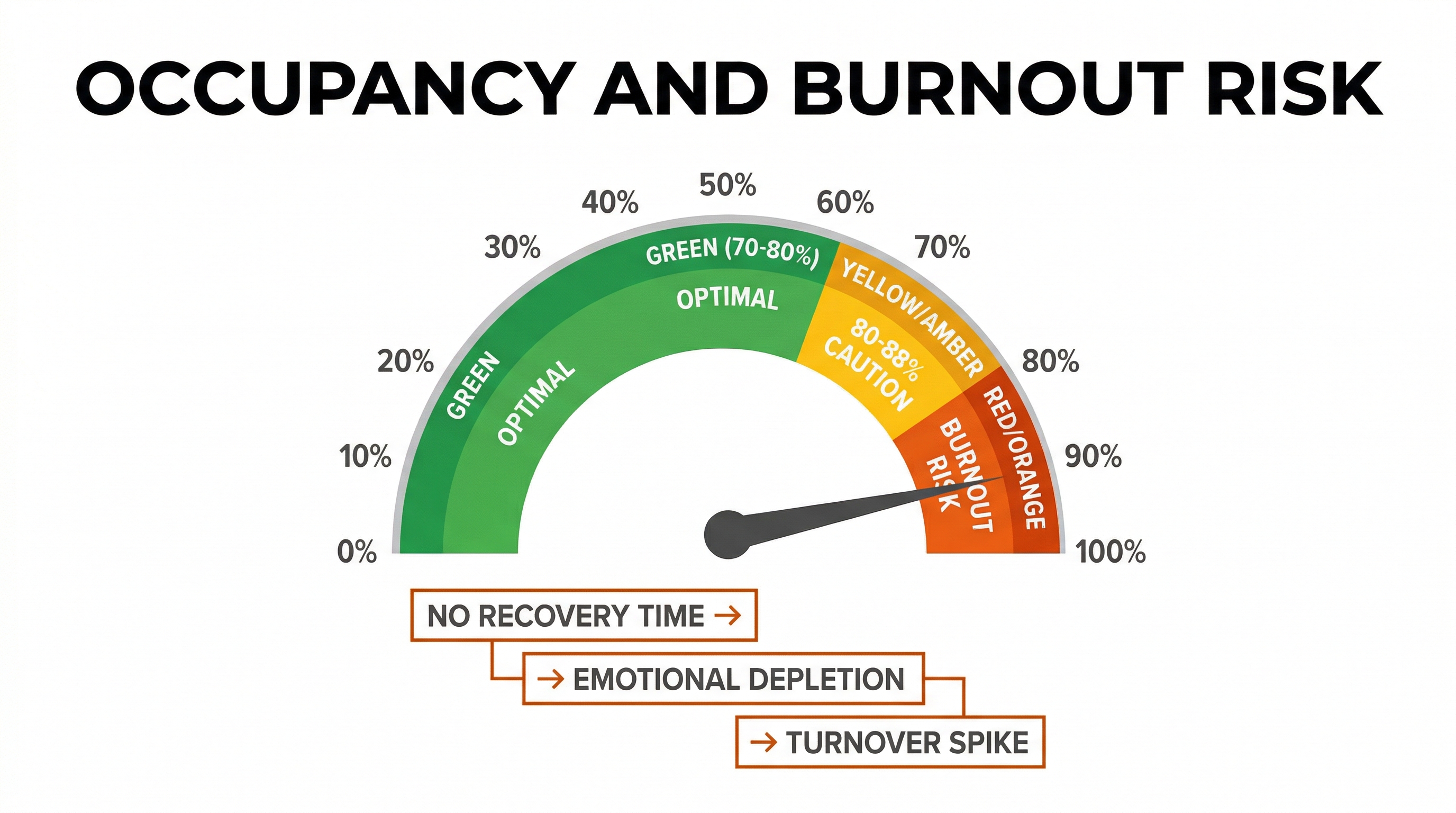
High occupancy in contact centers can have detrimental effects on call center agent burnout. Call center careers are often characterized by short-term contracts, high turnover rates, and little opportunity for career progression (Coetzee & Harry, 2014).
These factors, combined with the high levels of supervision monitoring and emotional labor associated with the occupation, can lead to burnout among call center agents (Fulaedzah, 2022). Burnout is a state of physical, emotional, and mental exhaustion caused by chronic work-related stress (Lee et al., 2019). It is often characterized by emotional exhaustion, depersonalization, and reduced personal accomplishment (Rod & Ashill, 2009).
How High Occupancy Drives Burnout
The high pressure and demands of contact center work can contribute to burnout among employees (Fulaedzah, 2022). Contact center employees are often vulnerable to burnout due to the constant interaction with customers and the need to meet their expectations (Fulaedzah, 2022).
This can lead to emotional exhaustion, where employees feel drained and overwhelmed by their work (Wang et al., 2021). Additionally, the repetitive nature of contact center work and the lack of variety can contribute to feelings of depersonalization, where employees develop a cynical and detached attitude towards their work and customers (Chambel et al., 2021).
Addressing the Root Causes
To mitigate the effects of high occupancy on call center agent burnout, it is important to address the underlying factors that contribute to burnout. This includes:
- Providing opportunities for career progression and development
- Improving working conditions
- Implementing strategies to manage emotional labor and stress (Coetzee & Harry, 2014)
It is also important to promote a supportive and positive work environment, where employees feel valued and appreciated (Harry, 2021). By addressing these factors, organizations can help reduce burnout among call center agents and improve their overall well-being and job satisfaction.
The research on mental wellbeing and agent performance identifies emotional intelligence and sense of meaningfulness as protective factors — resources that buffer agents against burnout even in demanding environments. Organizations that invest in developing these capacities alongside managing occupancy targets create compounding protective effects.
For a broader view of the systems that drive attrition in contact centers — and the strategies that demonstrably reduce it — see Solving Agent Attrition. The occupancy variable discussed here is one of the most directly actionable levers that the WFM Frameworks applied by high-maturity operations use to keep turnover manageable.
References
Chambel, M., Carvalho, A., Lopes, S., & Cesário, F. (2021). Perceived overqualification and contact center workers’ burnout: are motivations mediators?. International Journal of Organizational Analysis, 29(5), 1337-1349. Link
Coetzee, M. and Harry, N. (2014). Emotional intelligence as a predictor of employees’ career adaptability. Journal of Vocational Behavior, 84(1), 90-97. Link
Fulaedzah, I. (2022). Burnout on contact center: a literature review. Interdisciplinary Social Studies, 1(4), 383-402. Link
Harry, N. (2021). Call centre agents’ emotional intelligence as predicators of their exhaustion and professional efficacy: the moderating effect of meaningfulness. SA Journal of Industrial Psychology, 47. Link
Lee, C., Wu, J., & Du, J. (2019). Work stress and occupational burnout among dental staff in a medical center. Journal of Dental Sciences, 14(3), 295-301. Link
Rod, M. and Ashill, N. (2009). Symptoms of burnout and service recovery performance. Managing Service Quality, 19(1), 60-84. Link
Wang, Y., Yu, H., Duan, Z., Wang, N., Zhou, Q., Fang, K., … & Wang, X. (2021). Occupational burnout among frontline health professionals in a high-risk area during the covid-19 outbreak: a structural equation model. Frontiers in Psychiatry, 12. Link